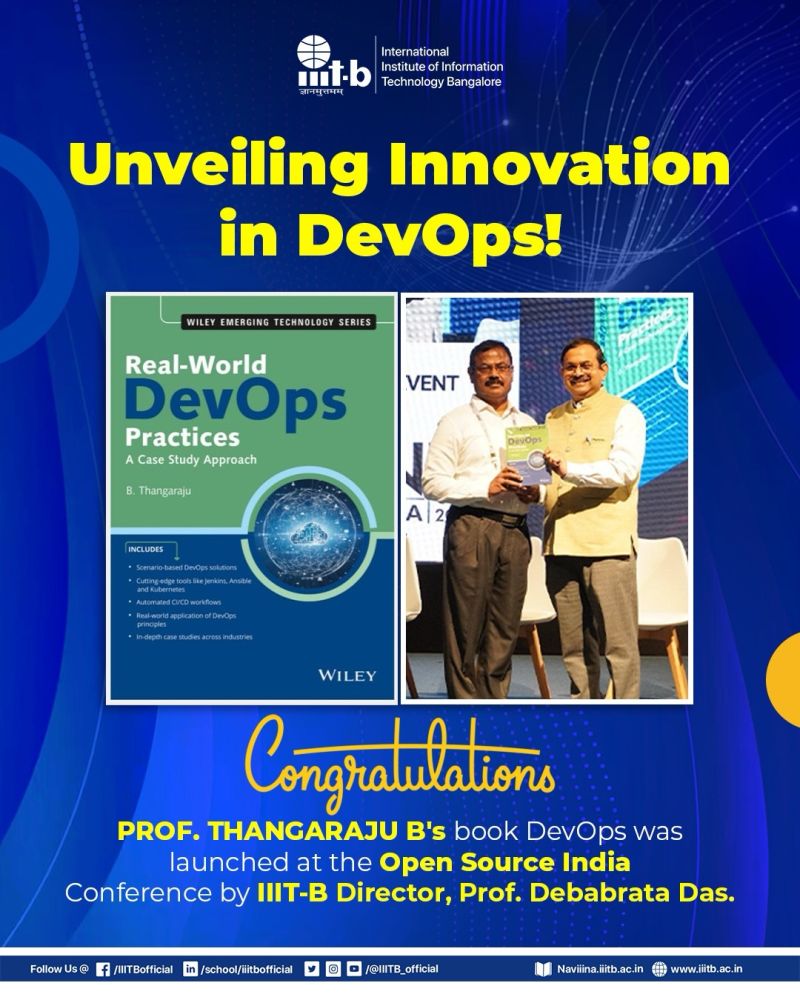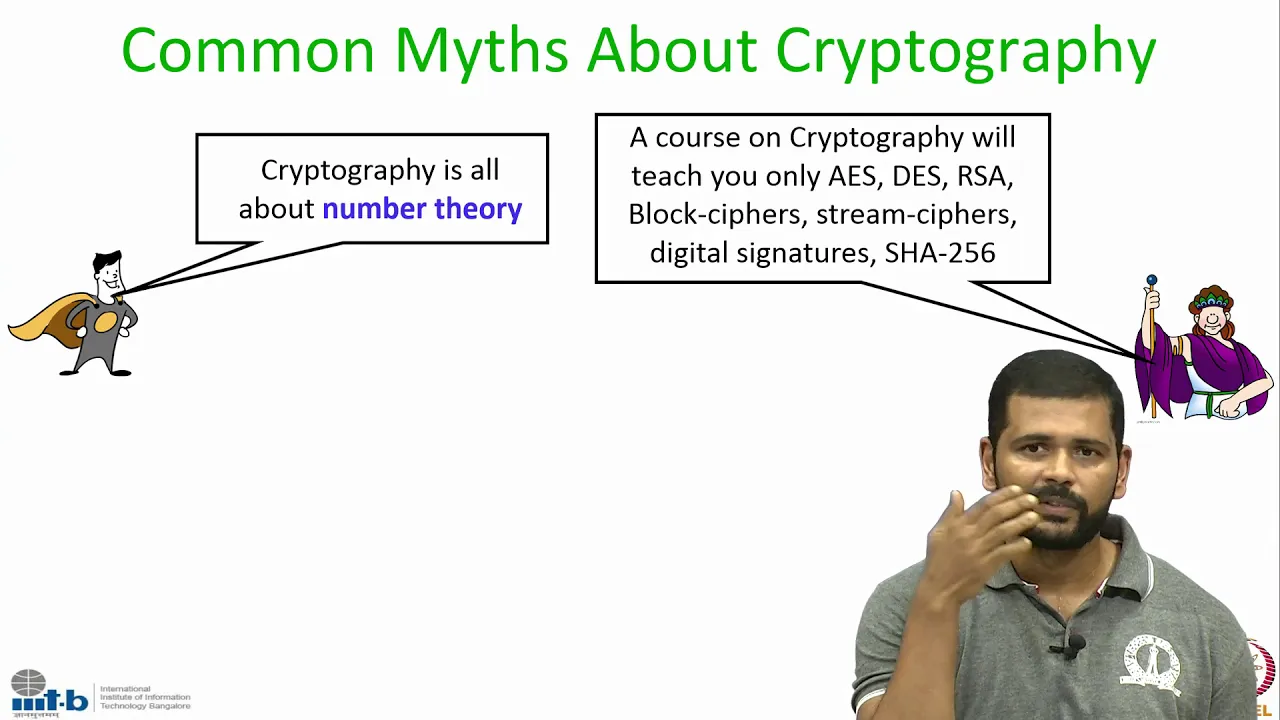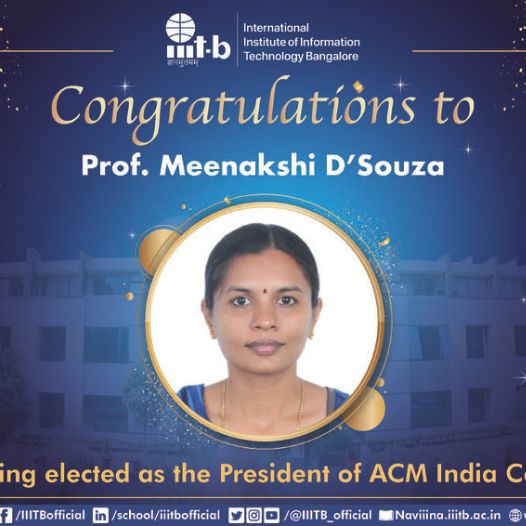
[divi8_image_carousel divi8_sliderspeed=”1000″ divi8_sliderperview_tablet=”” divi8_sliderperview_phone=”1″ divi8_sliderperview_last_edited=”on|tablet” module_class=”para_text_show” _builder_version=”4.25.1″ _module_preset=”default” heading_text_align=”justify” sub_heading_text_align=”justify” hover_enabled=”0″ custom_css_free_form=”.para_text_show .swiper-navi-container {|| top: 30%;||}” global_colors_info=”{}” sticky_enabled=”0″ divi8_arrow_show_hide=”off”][divi8_image_carousel_item heading=”Check out Prof. B. Thangaraju’s book Real-World DevOps Practices: A Case-study Approach published by Wiley in October 2024, ISBN: 9789357465946 ” description=”Dr. B. Thangaraju is a professor at the International Institute of Information Technology, Bangalore (IIIT-B), with over 28 years of experience in Operating Systems Internals, Linux System and Kernel Programming, Embedded and Real-Time Linux, Linux System Administration, and DevOps…” img=”https://cse.iiitb.ac.in/wp-content/uploads/2024/11/Prof_B_Thangaraju.jpg” divi8_image_content_position=”outside” _builder_version=”4.25.1″ _module_preset=”default” text_font=”–et_global_body_font|700|||||||” text_text_color=”#000000″ text_font_size=”14px” text_line_height=”1.8em” content_font=”–et_global_body_font||||||||” content_text_color=”#666666″ content_font_size=”14px” content_line_height=”1.8em” link_option_url=”https://www.wileyindia.com/real-world-devops-practices-a-case-study-approach.html” hover_enabled=”0″ custom_css_free_form=”.para_text_show .img_caro img{|| /* width: 320px;|| height: 320px;*/||}||||.para_text_show ||.img_caro_outside.img_caro_text{|| width: 305px;|| padding: 20px 20px;|| margin-top: -51px;|| position: relative;|| z-index: 99999;|| background: #ffffff;|| box-shadow: 0px 0px 6px 0px rgba(14, 15, 43, 0.1);|| min-height: 500px;||}” global_colors_info=”{}” sticky_enabled=”0″][/divi8_image_carousel_item][divi8_image_carousel_item heading=”Sincere congratulations to Prof. Ashish Choudhury on his single author paper titled Almost-surely terminating asynchronous Byzantine agreement against general adversaries with optimal resilience published in the journal of Theoretical Computer Science, 2024.” description=”In this work, we study almost-surely terminating asynchronous Byzantine agreement (ABA) for n parties tolerating a computationally-unbounded adversary. While the existing works in this domain have primarily considered a threshold adversarial model where the adversary can…” img=”https://cse.iiitb.ac.in/wp-content/uploads/2024/11/Prof_Ashish_Choudhury.jpg” divi8_image_content_position=”outside” _builder_version=”4.25.1″ _module_preset=”default” text_font=”–et_global_body_font|700|||||||” text_text_color=”#000000″ text_font_size=”14px” text_line_height=”1.8em” content_font=”–et_global_body_font||||||||” content_text_color=”#666666″ content_font_size=”14px” content_line_height=”1.8em” link_option_url=”https://www.sciencedirect.com/science/article/abs/pii/S0304397524001075?via%3Dihub” custom_css_free_form=”.para_text_show .img_caro img{|| /* width: 320px;|| height: 320px;*/||}||||.para_text_show ||.img_caro_outside.img_caro_text{|| width: 305px;|| padding: 20px 20px;|| margin-top: -51px;|| position: relative;|| z-index: 99999;|| background: #ffffff;|| box-shadow: 0px 0px 6px 0px rgba(14, 15, 43, 0.1);|| /*min-height: 350px;*/||}” global_colors_info=”{}”][/divi8_image_carousel_item][divi8_image_carousel_item heading=”Software Testing course taught by Prof. Meenakshi D’Souza on the NPTEL platform surpasses 75000 registrations in its 2024 re-run.” description=”This course will cover various techniques for test case design, as used for testing of software artifacts including requirements, design and code. We will discuss algorithms and techniques for test case design based on graphs, logic, syntax of programming languages and on inputs. Special techniques for testing object-oriented features and web applications will also be discussed…” img=”https://cse.iiitb.ac.in/wp-content/uploads/2024/11/software-testing-meenakshi.webp” divi8_image_content_position=”outside” _builder_version=”4.25.1″ _module_preset=”default” text_font=”–et_global_body_font|700|||||||” text_text_color=”#000000″ text_font_size=”14px” text_line_height=”1.8em” content_font=”–et_global_body_font||||||||” content_text_color=”#666666″ content_font_size=”14px” content_line_height=”1.8em” link_option_url=”https://nptel.ac.in/courses/106101163″ custom_css_free_form=”.para_text_show .img_caro img{|| /* width: 320px;|| height: 320px;*/||}||||.para_text_show ||.img_caro_outside.img_caro_text{|| width: 305px;|| padding: 20px 20px;|| margin-top: -51px;|| position: relative;|| z-index: 99999;|| background: #ffffff;|| box-shadow: 0px 0px 6px 0px rgba(14, 15, 43, 0.1);|| /*min-height: 350px;*/||}” global_colors_info=”{}”][/divi8_image_carousel_item][divi8_image_carousel_item heading=”Look out for the re-runs of the four NPTEL courses that Prof. Ashish Choudhury teaches on the NPTEL, Swayam platform: Discrete Mathematics, Foundations of Cryptography, Theory of Secure Computation-Part I, Theory of Secure Computation-Part II.” description=”The course provides the basic paradigm and principles of modern cryptography. The focus of this course will be on definitions and constructions of various cryptographic objects. We will try to understand what security properties are desirable in such objects, how to formally define…” img=”https://cse.iiitb.ac.in/wp-content/uploads/2024/11/Ashish_Choudhury.webp” divi8_image_content_position=”outside” _builder_version=”4.25.1″ _module_preset=”default” text_font=”–et_global_body_font|700|||||||” text_text_color=”#000000″ text_font_size=”14px” text_line_height=”1.8em” content_font=”–et_global_body_font||||||||” content_text_color=”#666666″ content_font_size=”14px” content_line_height=”1.8em” link_option_url=”https://nptel.ac.in/courses/106106221″ custom_css_free_form=”.para_text_show .img_caro img{|| width: 320px;|| height: 320px;||}||||.para_text_show ||.img_caro_outside.img_caro_text{|| width: 305px;|| padding: 20px 20px;|| margin-top: -51px;|| position: relative;|| z-index: 99999;|| background: #ffffff;|| box-shadow: 0px 0px 6px 0px rgba(14, 15, 43, 0.1);|| /*min-height: 350px;*/||}” global_colors_info=”{}”][/divi8_image_carousel_item][divi8_image_carousel_item heading=”Prof. Meenakshi D’Souza is the President of ACM India for the term July 2024 to June 2026″ description=”Meenakshi is a Professor and the Head of the Department of Computer Science at IIIT-Bangalore where she teaches a variety of courses including Automata Theory and Computability, Algorithms, Software Testing and Graph Theory. Meenakshi’s Software Testing course is offered on the NPTEL platform since 2017 and more than 57000 learners have enrolled for this course over these years…” img=”https://cse.iiitb.ac.in/wp-content/uploads/2024/11/Prof_Meenakshi_DSouza.jpg” divi8_image_content_position=”outside” _builder_version=”4.25.1″ _module_preset=”default” text_font=”–et_global_body_font|700|||||||” text_text_color=”#000000″ text_font_size=”14px” text_line_height=”1.8em” content_font=”–et_global_body_font||||||||” content_text_color=”#666666″ content_font_size=”14px” content_line_height=”1.8em” link_option_url=”https://www.acm.org/articles/acm-india-bulletins/2024/acm-india-elects-meenakshi-dsouza-as-president” custom_css_free_form=”.para_text_show .img_caro img{|| /* width: 320px;|| height: 320px;*/||}||||.para_text_show ||.img_caro_outside.img_caro_text{|| width: 305px;|| padding: 20px 20px;|| margin-top: -51px;|| position: relative;|| z-index: 99999;|| background: #ffffff;|| box-shadow: 0px 0px 6px 0px rgba(14, 15, 43, 0.1);|| /*min-height: 350px;*/||}” global_colors_info=”{}”][/divi8_image_carousel_item][/divi8_image_carousel]